

Glasses for a big nose: how to choose, and 8 frames that work
A prominent nose wants a high or keyhole bridge, a thick front and a generous width: the frame should contain the nose, not rest on it. The rules for a long, wide or bumped nose and eight frames from independent designers, chosen by OCCHIO!.
A nose is not hidden. It is framed.
Anyone with a prominent nose, long, wide or with a bump, knows it: the wrong frame makes it look twice the size. There is one rule, and it applies to every shape: the frame should contain the nose, not rest on top of it. Here is how that translates into bridge, lens width and thickness, and the eight frames from the OCCHIO! selection that do it best.
mm of bridge recommended with a wide nose: the second number on the frame
where the bridge should attach with a long nose: keyhole or double, never low
frames chosen for a prominent nose, optical and sun, available now
Three things that matter, in order
1. The bridge. It is where the frame meets the nose, and it decides everything. A keyhole bridge, with its lock-shaped notch, sits high and lets the root of the nose breathe: that is why Fifties crown pantos suit a strong nose. A double bridge, as on aviators, splits the nose in two and lifts the eye. A low thin bridge does the opposite: it lengthens it.
2. Lens width. A prominent nose wants a proportionate front. In a small frame the nose comes out of the picture; with a generous width (48–52 mm optical, over 52 for sun) it stays inside. Cubitts makes the same frame in five sizes: the simplest way to see how much it changes.
3. Thickness. Thick acetate, 6 to 8 mm, has a presence that balances the nose; thin light metal leaves it alone. If you want metal, take it with a double rim or a double bridge, like the AKONI Calisto.
Long nose, wide nose, nose with a bump
- Long: a high bridge, a frame that covers the upper part of the nose. Rounds with a high attachment (Eyevan 7285 347), crown pantos, aviators.
- Wide: a bridge of 22 mm and up, adjustable pads or a wide keyhole. Never a frame that pinches: it leaves marks and rides up.
- With a bump: the bridge must pass above the bump, not rest on it. Keyhole or double bridge; in the boutique we check the frame does not slip.
- Big in general: soft oversize, dark or coloured acetate along the top line. Colour on top pulls the eye to the eyes.
What to avoid
Small, round, thin frames with a low bridge: the most common and the worst for a prominent nose. Lenses that are shallow and leave the nose exposed underneath. Metal bridges of 18–19 mm, which pinch. And the most frequent advice, «choose something discreet»: a discreet frame on a prominent nose puts it on show, one with character balances it.
The eight frames

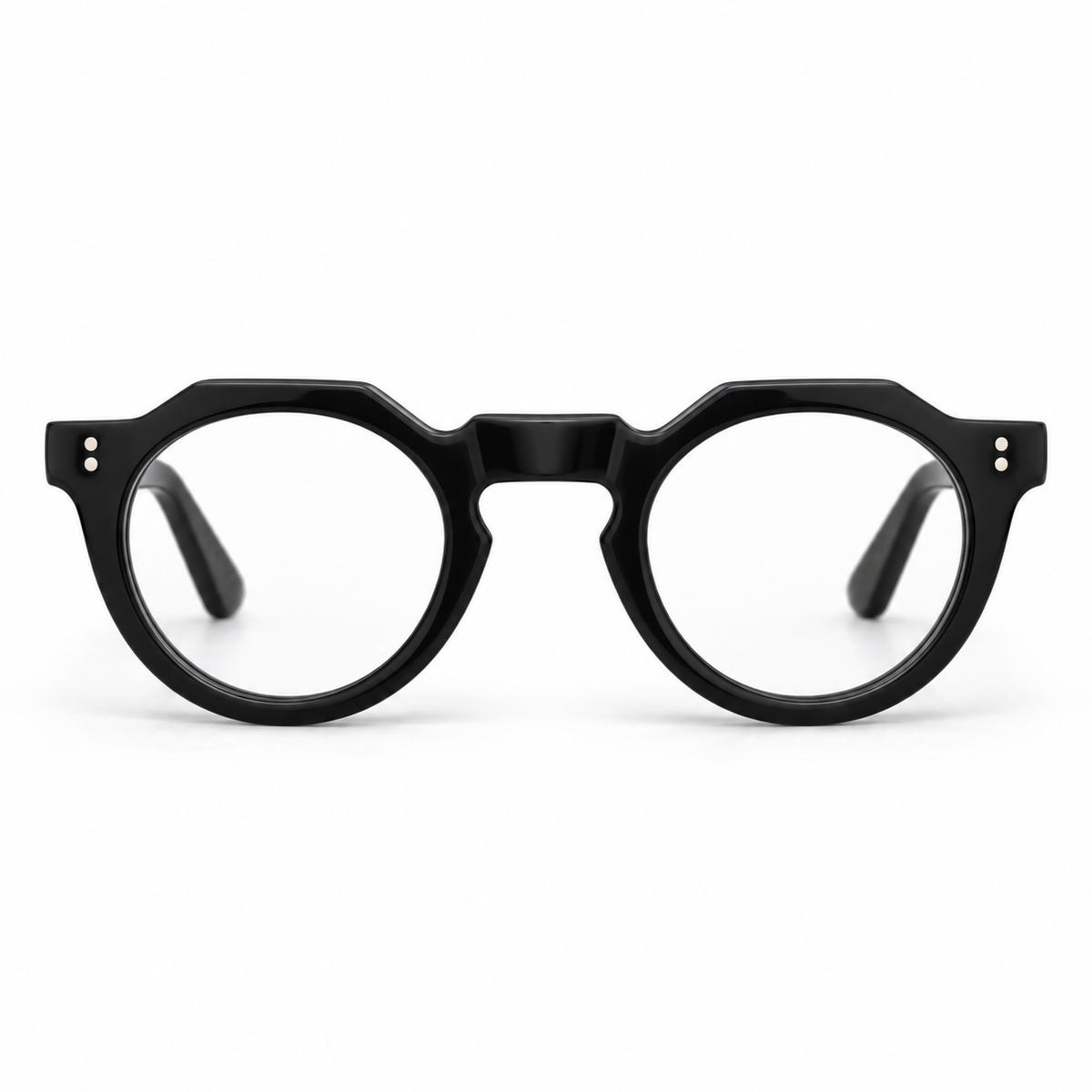
Lesca Lunetier Pica Black
The crown panto par excellence: a keyhole bridge that sits high, a sharp top line, 8 mm acetate. The nose stays inside the frame, not under it.
See the product
Julius Tart Optical AR Tokyo Tortoise
James Dean's Arnel: a wide keyhole bridge and a full front. For seventy years it has suited anyone with a strong nose.
See the product
TVR 504 Classic Black
The JD shape in three sizes: with a prominent nose it pays to go up a size, and the 504 is one of the few that reaches 50 without changing its proportions.
See the product
Cubitts Panton Slate XXL
Cubitts makes the same frame in five sizes: the XXL has a bridge and width proportioned to a big face. The lowest price on the list.
See the product
Balmain Captaine Black Gold
The double-bridge aviator: the top bar lifts the eye and splits the nose in two, which is why the aviator works so well with a prominent nose.
See the product
AKONI Calisto Brushed White Gold
A double rim and top bar in brushed titanium: an optical aviator that fills the upper part of the face without weighing on it.
See the product
Eyevan 7285 347e
The round with the high bridge and low temples: a bridge that attaches high is exactly what a long nose needs.
See the product
Lesca Lunetier Ogre XL
Big and soft: a wide front resizes any nose. Lesca's best-selling sunglass.
See the productFor the rest of the face
The nose is one part of the choice: the guides to round, square and long faces cover the rest, and the sizing guide explains how to read lens width, bridge and temple. To see every keyhole bridge in the selection: crown panto glasses; for aviators, optical and sun.
What glasses suit a big nose?
Frames with a high or keyhole bridge, a thick front and a generous lens width: the frame should contain the nose, not rest on top of it. Crown pantos (Lesca Pica, Julius Tart AR), double-bridge aviators and soft oversize frames all work. Avoid small frames and low thin bridges, which make the nose look even bigger.
Long nose: high or low bridge?
High. A bridge that attaches high, as on Eyevan rounds or crown pantos, visually shortens the nose because the frame covers its upper part. A low bridge lengthens it.
Nose with a bump: what to choose?
A keyhole bridge or a double bridge that passes above the bump, not on it. Bridge width matters too: if it is narrow, the frame rides up and slips. In the boutique we adjust the nose pads or choose a size with a wider bridge.
Wide nose: which bridge size?
From 21 mm up, better 22–24. The second number in the frame code (e.g. 48–22–145) is the bridge. With a wide nose, an 18–19 bridge pinches and leaves marks.
Does frame colour matter?
Yes: a dark or coloured front along the top line (tortoise, black, blue) pulls the eye to the eyes and away from the nose. Thin light metal frames do the opposite.
A bridge is tried, not calculated
In our boutique in Crema, Italy, we adjust pads and temples to your nose in ten minutes. Online, send us a front-facing photo on WhatsApp and we will tell you which of the frames on this page suit you best. Worldwide shipping from Italy.