

Rimless glasses: how they are built, which lenses they need and the models
Two drilled lenses, a bridge, two temples: rimless glasses are eyewear stripped to the bone. How they are made, which lenses they need, who they suit and the eight models available now.
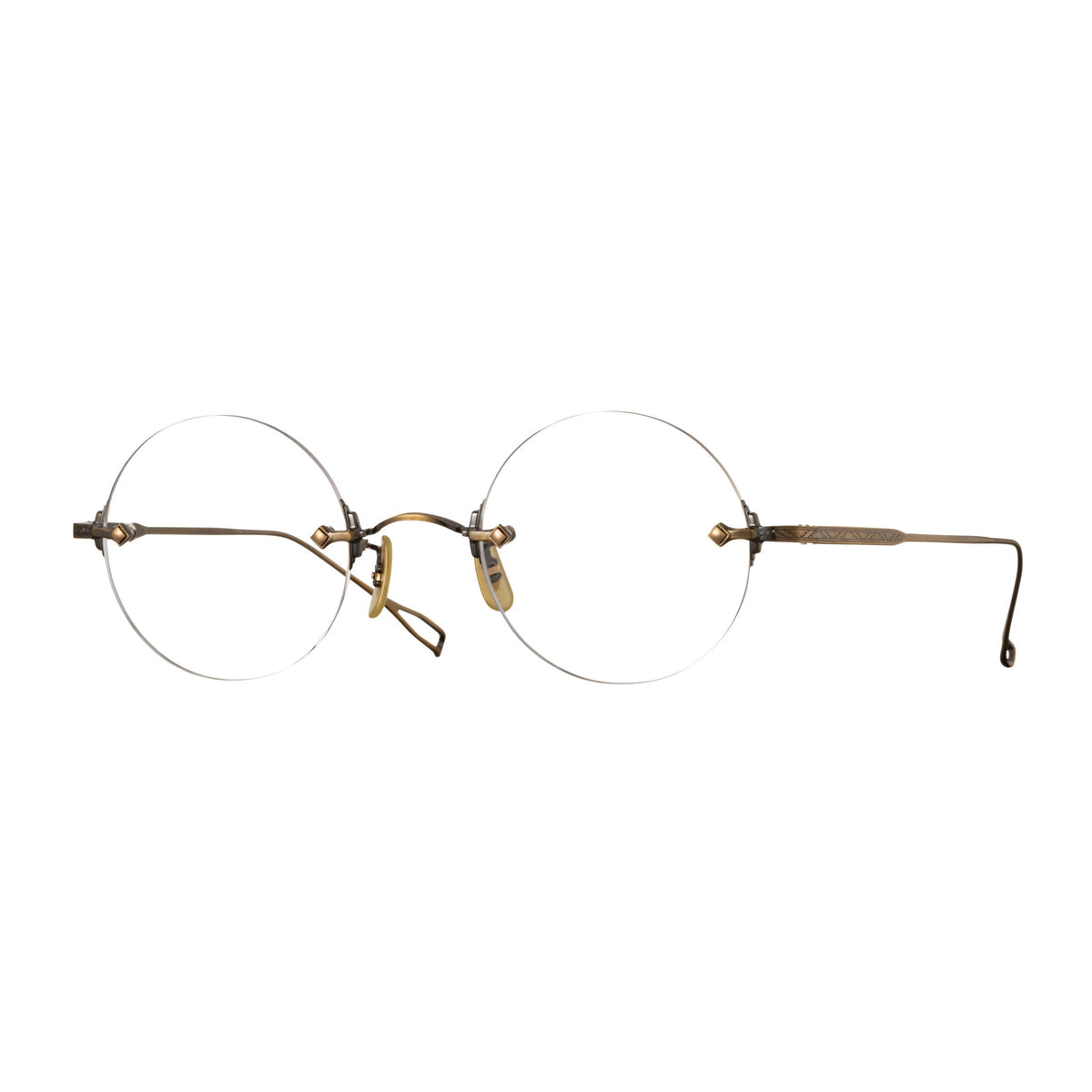
Two lenses, a bridge, two temples. That's it.
Rimless glasses are eyewear pared back to the essentials: no rim, no acetate, just lenses drilled and screwed to the metal. They weigh a few grams and leave the face in view. Or, in the hands of Kuboraum and T HENRI, they become the most sculptural pieces in the catalogue. Here is how they work, which lenses they need and the eight models available now.
metal parts in a rimless frame: the bridge and two end pieces. Everything else is lens
minimum recommended index for drilled lenses; otherwise polycarbonate or Trivex
rimless models available now, optical and sunglasses
How rimless glasses are built
Each lens has two holes, one on the nose side and one on the temple side. The bridge post goes through the first, the temple end piece through the second; screws, nuts or plastic bushings hold everything in place. In Italy this construction is called glasant, everywhere else rimless. The lens no longer has an outline holding it: its shape is decided by the lab, not by the frame.
It should not be confused with a semi-rimless (nylor) frame, with a half rim on top and a nylon thread underneath: there the lens is grooved, not drilled, and it is a different construction.
The lenses: what really matters
In a rimless frame the lens is also the structure, and every hole is a stress point. It needs a material that will not crack: polycarbonate, Trivex or a high-index plastic (1.6, 1.67, 1.74). Glass is ruled out. Drilling requires a dedicated machine and skilled hands: a lens drilled slightly off will work loose within weeks. That is why a rimless frame should be bought where the lenses are made, not only where the frame is sold.
Weight, face, shape
A complete titanium rimless with lenses weighs between 10 and 15 grams: half the weight of a thick acetate frame. It imposes no outline on the face, so it works with any face shape; it is the frame for people who want their face to be seen, not their glasses. The same bridge can carry a round, oval or rectangular lens and give three different pairs of glasses: in our boutique we choose the shape from lens templates.
The other school: rimless that stands out
Kuboraum and T HENRI use the same construction for the opposite reason. Without a rim, the shaped lens becomes the whole shape of the glasses: a P63 Mask is a coloured slab on the face, a Moonbeam is a green teardrop lens held by two gold temples. There is nothing discreet about them. This is rimless as an object, not as the absence of one.
The eight models available now

Eyevan Orbit AG
Eyevan's rimless: titanium bridge and temples, clear lens. Rimless as it was made in the nineties, with today's screws and finishes.
See the model
Eyevan Orbit P
The same Orbit with a sun lens: without a rim, the sunglasses are pure colour. One of the lightest pairs in the selection.
See the model
Eyevan Orbit S
The version with a gradient lens: the edge of the lens becomes the design of the frame.
See the model
Leisure Society Aubrey 24K Gold
Rimless with 24-carat gold-plated bridge and temples: when a frame is reduced to three parts, each part has to be perfect.
See the model
Kuboraum P62 SI YB
The Mask without a rim: Kuboraum keeps the shape and takes away the acetate. Shaped lenses, metal bridge and temples.
See the model
Kuboraum P63 GM PM
The P63 as sunglasses: the coloured lens is the whole frame. One of the most recognisable rimless designs around.
See the model
Kuboraum H44 PG Rosegold
Kuboraum's H series in rose gold: an exposed lens with a minimal metal profile. Sculptural rimless, not discreet rimless.
See the model
T HENRI Moonbeam Verdant Serenade
Shaped green lens, plated titanium bridge and temples: the collaboration between T HENRI and designer Tamara Ralph, in 125 pieces.
See the modelWhere to look
All the rimless optical frames are in rimless eyeglasses, the sunglasses in rimless sunglasses. If you want the lightness but with a rim, look at titanium glasses and read titanium or acetate: how a frame changes.
How are rimless glasses held together?
The lenses are drilled and fixed with screws or posts to the bridge and to the temple end pieces: three metal parts and two lenses, nothing else. In Italy they are also called glasant. Semi-rimless (nylor) glasses have a half rim on top and a nylon thread underneath: that is a different construction.
Which lenses does a rimless frame need?
Lenses that will not crack around the holes: polycarbonate, Trivex or high-index materials (1.6 or higher). Glass and standard 1.5 plastic are not suitable. The lenses must be drilled in a lab with the right equipment: it is the step that decides how long the glasses last.
Are they fragile?
Less than they used to be. A well-made rimless with the right lenses and proper screws lasts as long as a rimmed frame. The weak point is the screws, which should be checked from time to time: in our boutique it takes five minutes.
Can I choose the lens shape?
Yes, that is the advantage of rimless: the lens has no rim, so you decide its shape with the optician, within the limits of the bridge. The same rimless with a round lens and with a rectangular lens are two different pairs of glasses.
Who do they suit?
People who want their face to be seen, not their glasses: it is the lightest and most discreet frame there is. It works with any face shape because it imposes no outline. Kuboraum and T HENRI rimless are the exception: there the shaped lens is the shape, and they get noticed.
A rimless is bought with its lenses
With your prescription we choose the lens material, index and shape and drill it in the lab. In our boutique in Crema, Italy; online, send us your prescription on WhatsApp.