

Aviator glasses: from the cockpit to independent designers
Born for pilots in the 1930s, reinterpreted today by independent designers: history, design and six aviator models from the OCCHIO selection.
By OCCHIO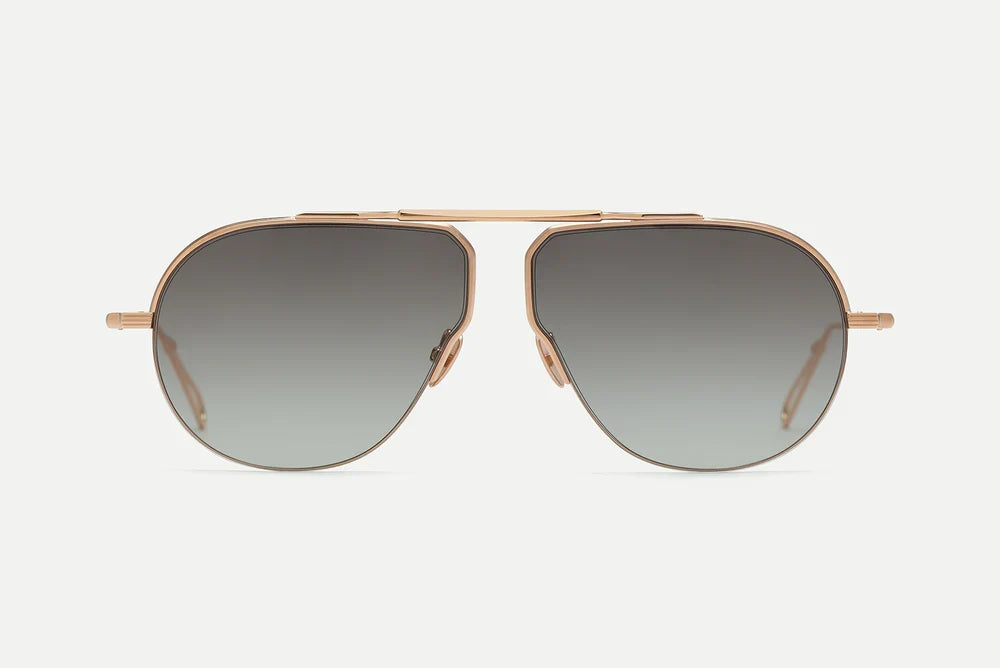
A teardrop lens, a double bridge, slim metal. The aviator was born to solve a technical problem and, within a few years, became one of the most recognisable shapes in eyewear.

A shape born at altitude.
In the late 1920s the US Army Air Corps wanted glasses that would cut the glare of the sky at high altitude. Colonel John A. Macready worked with Bausch & Lomb on a prototype: in 1937 the model reached the public, and a year later it was given a metal frame.
The lens drops towards the cheekbone because pilots constantly look down at the instrument panel, below eye level. The first lenses were green. From the 1940s the aviator left the military bases and became an everyday pair of glasses.
What makes an aviator.
When one of these three elements changes, the shape stays recognisable but takes on a different character. The caravan, for instance, is its squarer relative.


03 / The models
Six interpretations.
Independent designers start from the same outline and reinterpret it: in the material, the construction, the references.


How to choose one.
Start from lens width and bridge: aviator lenses are large and the front tends to be wide. Compare the measurements on the product page with a frame that fits you well, as explained in our size guide. Slim metal lightens the shape; acetate gives it more presence.
Frequently asked questions
Before you choose
Why are they called aviators?
Because they were created for pilots: the teardrop shape and the first green lenses were meant to reduce glare in flight.
Are aviator and caravan the same?
No. The caravan has squarer lenses and a more regular outline; it often keeps the double bridge.
Can they be fitted with prescription lenses?
On many frames, yes, depending on prescription and model: each product page says so, or ask us to check.
Can I try them before buying?
Yes, at our boutique in Crema, Italy. Online you will find photos, measurements and availability, with international shipping.
OCCHIO · Crema
The aviator selection
Sun and optical, in titanium, metal and acetate. Each model in a single piece.
Sources and images
Aviator sunglasses, Wikipedia. Official brand photographs, used editorially for products sold by OCCHIO.