

Titanium or acetate glasses: how the material changes a frame
Titanium weighs a few grams and never corrodes; clear acetate can stand out more than gold-coloured metal. Five things to know about titanium, three frames side by side and the models available now.
Transparent does not mean invisible.
You choose it because it looks discreet. Then you hold it to the light: the rim brightens, its thickness shows, the colour deepens. Pale acetate can spring that surprise. Titanium has others in store. Let’s follow three frames, side by side.

Titanium · Double rim
Calisto: the space between the lines
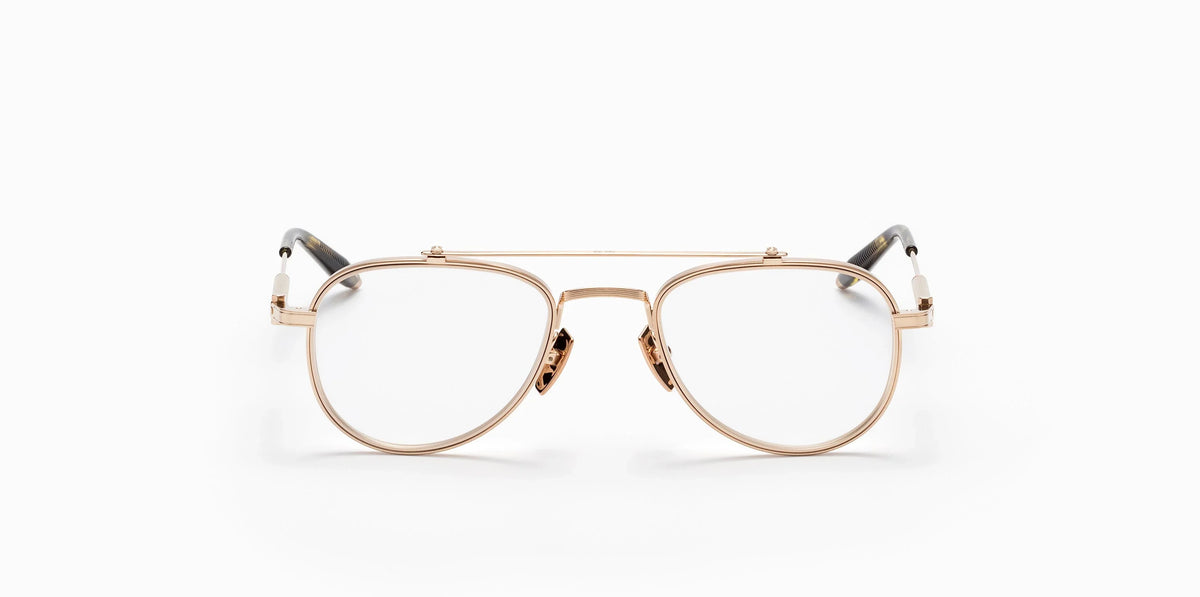
In AKONI Calisto Brushed White Gold, titanium follows the lens and draws a second rim around the first. A space remains between them. That is where the aviator front finds its character.
The brushed finish softens reflections. Move closer and you notice the joints and the brow bar: many slender elements can build a frame with real presence.
Discover Calisto
Acetate · Transparency
Rue du Soleil: colour has depth
Now turn to AHLEM’s November Light. Light passes through different thicknesses of acetate: one area looks pale, the next more saturated. The rim comes alive as soon as you change the angle.
Bevels add more reflections. That is why clear acetate deserves a try even when you want a frame with character. Among crystal frames, discretion and volume can coexist. We go further in clear glasses: how to choose a crystal frame.
Discover Rue du SoleilPerhaps it was the finish you fell for
“I like gold glasses” sounds like a precise preference. Then you try a polished pair and a brushed one, and on your face they give two different impressions. The surface changes how the light reaches you.
Something similar happens with acetate. A faceted edge can bring movement to a single colour. Before looking for another model, work out what drew you to the first.
Keep it on for a few minutes
Once the first impression fades, leave the glasses on your face. Weight depends on the whole object: front, temples, components and lenses. Titanium allows light constructions; comfort also comes from contact points and adjustment.
Feel pressure in one spot? Does the frame slip? Tell your optician. The material on the product page is part of the answer, not a promise of how it will fit you.

Titanium and acetate
KMN 6147: when you want both
KameManNen puts titanium and acetate together in the KMN 6147 BK. The dark rim meets the metal: follow the join and you can see what each part contributes.
The listed measurements are 47–24–145 mm. Look at it in profile, then go back to the first two frames: this pairing opens another option if you like the character of acetate alongside the precision of a metal outline.
Discover KMN 6147Titanium glasses: five things to know before you choose
lighter than steel
For the same volume. A full titanium frame stays under 20 grams with lenses.
nickel
Pure titanium contains none: it is the choice for skin that reacts to metals.
- Pure or beta. Pure titanium is rigid and light; beta titanium is an alloy that flexes and springs back, used for temples and ultra-thin frames. Many Japanese frames combine the two: a pure titanium front, beta titanium temples.
- It does not rust or corrode. Sweat, sea water, sunscreen: titanium stays the same. That is why a titanium frame from ten years ago can still look new, if the finish is good.
- The weak point is the finish, not the metal. The colour (gold, black, gunmetal) is a coating, usually ion-plated (IP). It lasts for years, but where it rubs against skin, at the nose pads and temple tips, it can fade. Brushed finishes show it less than polished ones.
- Sabae. This Japanese city makes the vast majority of the country’s frames and has specialised in titanium since the 1980s: KameManNen, Eyevan, TVR 538 and AKONI all come from there. Italian titanium exists, but it is rare.
- It can be adjusted, by someone who knows how. Pure titanium bends very little and breaks if forced; beta titanium adjusts well. In the boutique we know which one we are holding before we touch the frame.

Sabae · since 1917 · pure titanium
KameManNen 122
One of Japan’s oldest eyewear houses, in a round frame of matte black titanium: the pair to show anyone who asks what “Japanese titanium” means.
View the frame
Japan · titanium and acetate
AKONI Argo
Gold titanium holds a tortoiseshell acetate front: the combination that shows how thin the metal can be without losing rigidity.
View the frame
Sabae · titanium · every component designed
Eyevan 7285 414
In the 7285 line every screw, hinge and nose pad is designed from scratch. The 414 is where it shows best: titanium that looks like jewellery.
View the frame
Japan · since 1972 · titanium
Eyevan Thompson
Eyevan’s matte black titanium on a square shape: the easiest frame to wear in the selection, and one of the lightest.
View the frameReturn to the one that surprised you
Was it Calisto’s double rim or the transparency of Rue du Soleil? Now your choice has a concrete starting point.
Look for that effect among our titanium glasses and acetate frames. Then try it on: the best surprise is when you still like it in the most ordinary light. If you want ultimate lightness, look at rimless glasses too.
Are titanium glasses really lighter?
Yes: titanium weighs about 40% less than steel for the same volume and allows thinner sections. A full titanium frame, lenses included, usually stays under 20 grams; a thick acetate frame weighs 35–45.
Is titanium hypoallergenic?
Pure titanium contains no nickel and is the same material used for medical implants: it is the safest choice for anyone who reacts to metals. Watch out for cheap alloys sold as “titanium” and for finishes: it is the coating that touches your skin.
Titanium or acetate: which lasts longer?
Titanium does not oxidise, does not warp in heat and does not yellow; the coloured finish can wear where it rubs. Good acetate lasts a long time but dislikes heat (a car in the sun) and needs re-polishing every few years. With proper care, both last more than ten years.
How much do titanium glasses cost?
In the OCCHIO! selection, Japanese titanium from Eyevan, KameManNen and AKONI is the heart of the range, while numbered series in gold-plated titanium sit at the top end. Price depends on craftsmanship more than material: titanium milled and polished by hand costs as much as good handmade acetate.