

Tortoiseshell glasses: the havana pattern and how to choose it
Where the tortoiseshell pattern comes from, why it's made of acetate today, and how to choose between dark havana, light havana and shades with green or blue.
Journal · Colors
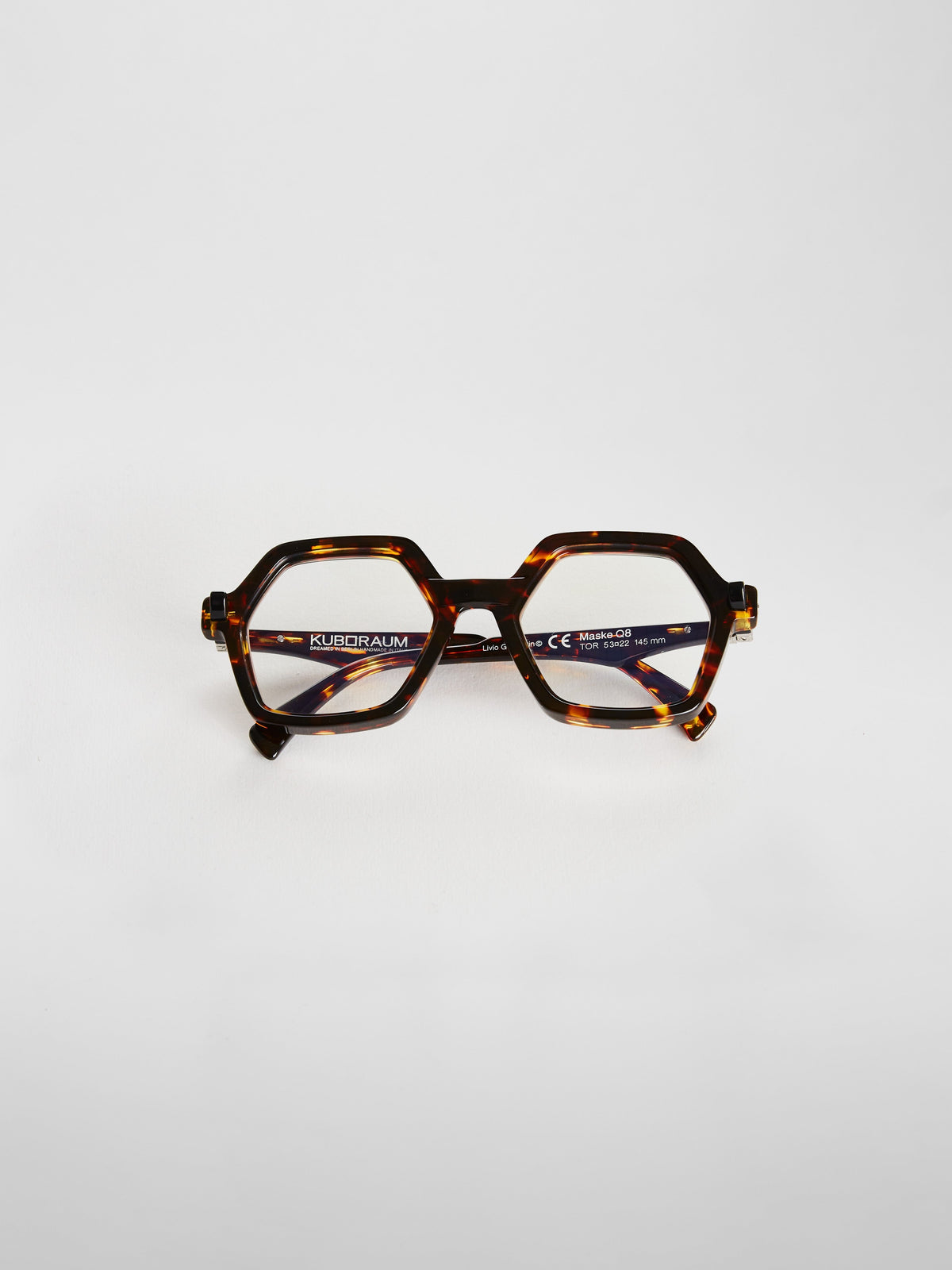
Tortoiseshell is a color that isn't a color: a pattern of browns, amber and black that changes from one point of the frame to the next. In the language of Italian eyewear it is often called havana.
Where it comes from
The pattern recalls the shell of the hawksbill turtle, once used for frames, combs and small objects. Today international trade in this material is banned by the CITES convention, which protects the species. Modern tortoiseshell frames are made of cellulose acetate: the sheets are built up from layers and inclusions of different colors, which is why two frames of the same model never have exactly the same pattern.

Why no two havanas are alike
A havana sheet is made by joining layers and inclusions of acetate in different colors. The front is cut from the sheet, and the pattern you see depends on where it was cut. That's why two pieces of the same model in the same color show slightly different patterns.
This applies to buying online too. Product photos come from the brands: your piece will be the same color, with a pattern that may vary in its shading and in where the spots fall.
Dark, light and colored havana
Dark. Deep brown dominates, with almost black areas. On the face it reads much like a black frame, but with a softer outline.
Light and honey. Amber and warm tones with more transparency. The frame looks lighter and lets the thickness of the acetate show.
With green, blue or red. In some sheets the pattern includes a touch of color. From a distance they still read as tortoiseshell; up close they reveal the tint.
How to read color names
Every brand names its havana its own way. Cubitts uses names like Dark Turtle and Dune, TVR speaks of Grey Tortoise, Lesca identifies colors with a number code, such as 424. The name alone says little: before choosing, look at the side photo, which shows how the color changes through the thickness of the acetate.
How to pair it
A practical rule is to look at your skin's undertone and your hair color. Warm and honey tones go well with skin and hair that have golden or copper reflections; dark havana is more versatile and also works with dark brown, black or grey hair. Here too, trying it on matters: tortoiseshell changes a lot with the light, so it's worth looking at it both in daylight and indoors.
In sunglasses the most common pairing is with brown or green lenses, which echo the tones of the pattern. Grey lenses create more contrast.

Six tortoiseshell frames, with measurements
- Kuboraum Q8 Tortoise · 53–22–145
- AKONI Argo Tortoise/Gold · 55–17–145. Tortoiseshell with gold details.
- Lesca Pica 424 · 44–25–145
- TVR 532 Classic Circular Grey Tortoise · 44–23–150
- Eyevan 7285 414 · 46–23–145
- Cubitts Frith L Dark Turtle · 51–20–145
Where to start
In the OCCHIO selection you'll find tortoiseshell eyeglasses and tortoiseshell sunglasses, from AKONI to Eyevan 7285, Lesca and Sestini. For shape, start with Round or oval glasses; for fit, with the measurement guide.
Frequently asked questions
Is tortoiseshell real turtle shell?
No. Trade in hawksbill turtle shell is banned by the CITES convention; today's frames are made of cellulose acetate.
Does havana acetate lose its color?
The color runs through the material and doesn't wear off. Over the years the surface can lose its shine: an optician can polish it.
Is it a color for men or women?
It's among the most chosen colors for both. Shade and shape are what matter.
Which sun lenses go with it?
Brown or green echo the tones of the pattern; grey creates more contrast.