

How to choose sunglasses: lens category, colour, shape and material
Lens first, then shape, then material. How to choose sunglasses by reading the filter category, the lens colour, the measurements and the way the frame sits on the face, with independent designer models to start from.
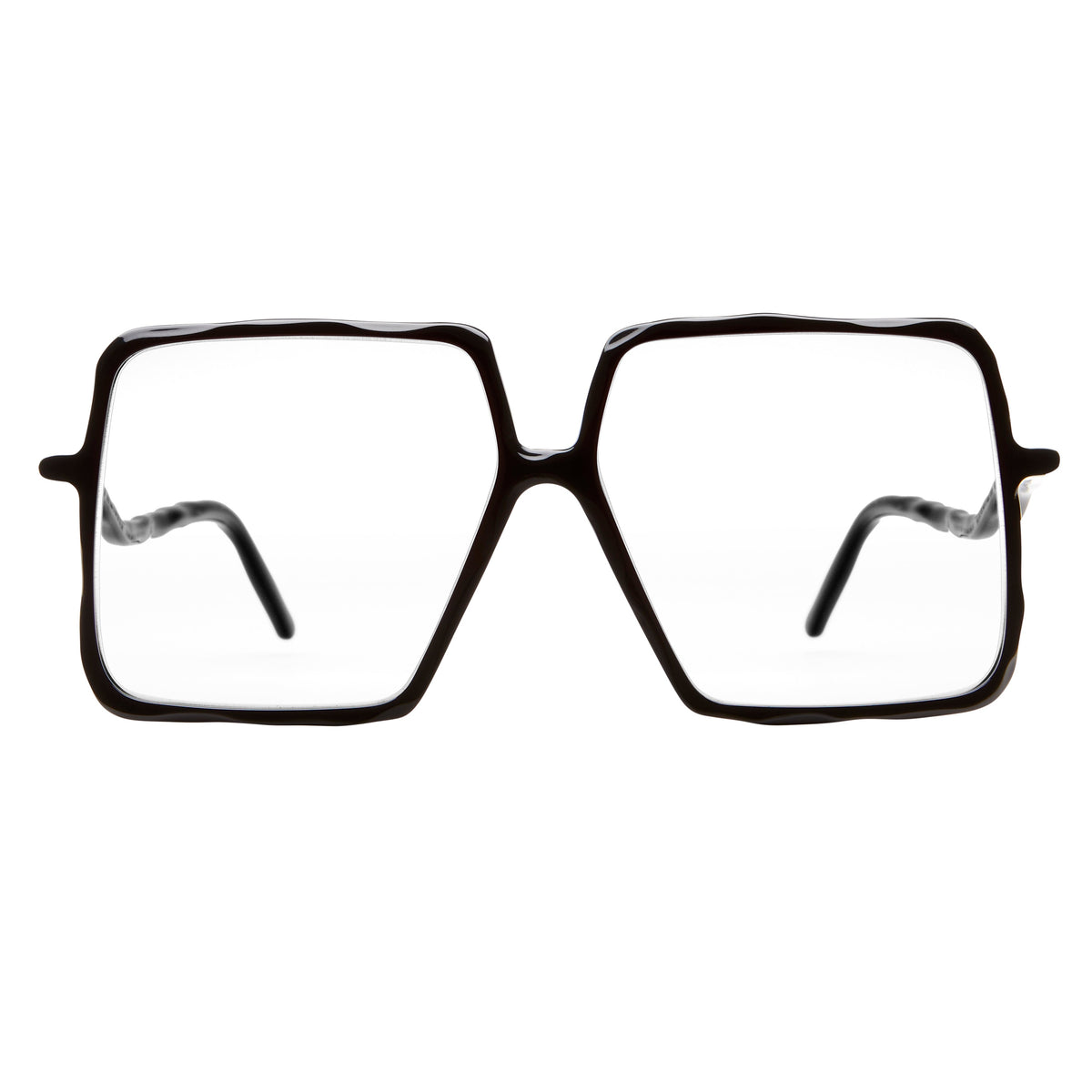
Sunglasses are almost always chosen backwards: first the shape you like, then, if you are lucky, a glance at the lens label. In our workshop we do the opposite, because the lens decides whether that pair will work for you in the car, at the beach or in the city. Here is how to choose sunglasses in five steps, from the filter to the frame.
1. The filter category
Every sun lens sold in Europe carries a category from 0 to 4 that says how much light it lets through. Category 3 is the right one for full sun, in the city and at the sea, and it is fine for driving; category 2 for medium light and lighter tinted lenses; category 4 only for high mountains and glaciers, and it is not allowed for driving. UV protection is a separate thing: it does not depend on colour or category, and every lens in our selection is UV400. The category is listed on each product page; more in category 3 sunglasses.
2. The lens colour
Colour is not only looks, it changes perception. Grey: true colours, the most neutral choice. Brown: more contrast, warm tones, excellent for driving. Green: contrast without distorting colours, the pilots' classic. Blue: cools the tones, a style choice. Yellow and orange: raise contrast under overcast skies and low light, not full-sun lenses. Red: character, for the city. Gradient lenses, dark above and light below, are for drivers who need to read the dashboard.
3. Polarised or not
A polarised lens cuts glare from horizontal surfaces: water, wet asphalt, a car bonnet. It is really useful on a boat, at the beach and for people who drive a lot; it bothers anyone reading LCD screens and some digital dashboards. Many models in the selection can be made with polarised lenses, prescription too: how it works in polarised lenses, when you need them.
4. Shape and measurements
Sunglasses cover more than optical frames: they have to protect from the side too, so as a rule they are a little wider than the face and more curved. Start from the measurements of the glasses you wear well, printed on the temple, and compare them with the product page: the size guide explains how to read them. Then the shape: round on a square face, rectangular or square on a round face, cat-eye to lift the gaze, aviator to balance a long face, oval when you want a soft line. The full rules are in which glasses suit me, by face shape. Then break them: the Kuboraum Masks follow no rule and suit many.
5. The material
Acetate gives volume, colour and presence: it is the material of Kuboraum, Lesca, AHLEM. Titanium weighs half as much and disappears on the face: Akoni, EYEVAN 7285, T HENRI. For sunglasses you will wear eight hours a day in summer, weight matters more than it seems in the shop. The full comparison is in titanium or acetate.
Where to start in the selection
For a pair that gets noticed: Kuboraum, T HENRI, AHLEM. For lightness: Akoni, EYEVAN 7285, Leisure Society. For colour: CHIMI and Paloceras. The full selection is in designer sunglasses, for men and women, and every brand is in the guide to independent eyewear brands.
Prescription sunglasses
Almost every sun frame in the selection takes prescription lenses, tinted or polarised, single-vision and progressive, fitted in the boutique workshop in Crema or by your own optician. Frames ship worldwide with their original lenses: see our pages for the US, the UK, Scandinavia, Dubai and the UAE and Israel.
How to choose sunglasses: frequently asked questions
Do darker lenses protect more from UV?
No. UV protection is a lens treatment, independent of colour. A light UV400 lens protects as much as a dark one; the dark tint is there to stop glare.
Which category for driving?
2 or 3. Category 4 is not allowed for driving.
Does everyone need polarised lenses?
No. They help on the water, at the beach and for people who drive a lot. Anyone working with screens outdoors finds them annoying.
Can I try sunglasses before buying online?
Yes, at a distance: we send you worn photos and measurements compared with your own glasses. How it works on the distance try-on page. Or in the boutique in Crema, Italy, forty minutes from Milan.
Can prescription lenses go into designer sunglasses?
Almost always, progressives included. We check the model before you order.