

LESCA LUNETIER
Lesca Lunetier glasses are the work of a French family: Joël Lesca started in 1964 in a small workshop in the 19th arrondissement of Paris, and today the house is carried forward by the second generation, Mathieu and Bertrand.

Authorised Lesca Lunetier retailer · Worldwide shipping
-
 Regular price €315,00Sale price €315,00 Regular priceUnit price per
-
 Regular price €315,00Sale price €315,00 Regular priceUnit price per
-
 Regular price €315,00Sale price €315,00 Regular priceUnit price per
-
 Regular price €315,00Sale price €315,00 Regular priceUnit price per
-
 Regular price €315,00Sale price €315,00 Regular priceUnit price per
-
 Regular price €315,00Sale price €315,00 Regular priceUnit price per
-
 Sold outRegular price €315,00Sale price €315,00 Regular priceUnit price per
-
 Sold outRegular price €315,00Sale price €315,00 Regular priceUnit price per
-
 Sold out
Limited edition · 100 pieces
Regular price €395,00Sale price €395,00 Regular priceUnit price per -
 Sold out
Limited edition · 100 pieces
Regular price €395,00Sale price €395,00 Regular priceUnit price per -
 Sold outRegular price €315,00Sale price €315,00 Regular priceUnit price per
-
 Sold outRegular price €395,00Sale price €395,00 Regular priceUnit price per
-
 Sold outRegular price €315,00Sale price €315,00 Regular priceUnit price per
-
 Sold out
Limited edition · 100 pieces
Regular price €395,00Sale price €395,00 Regular priceUnit price per


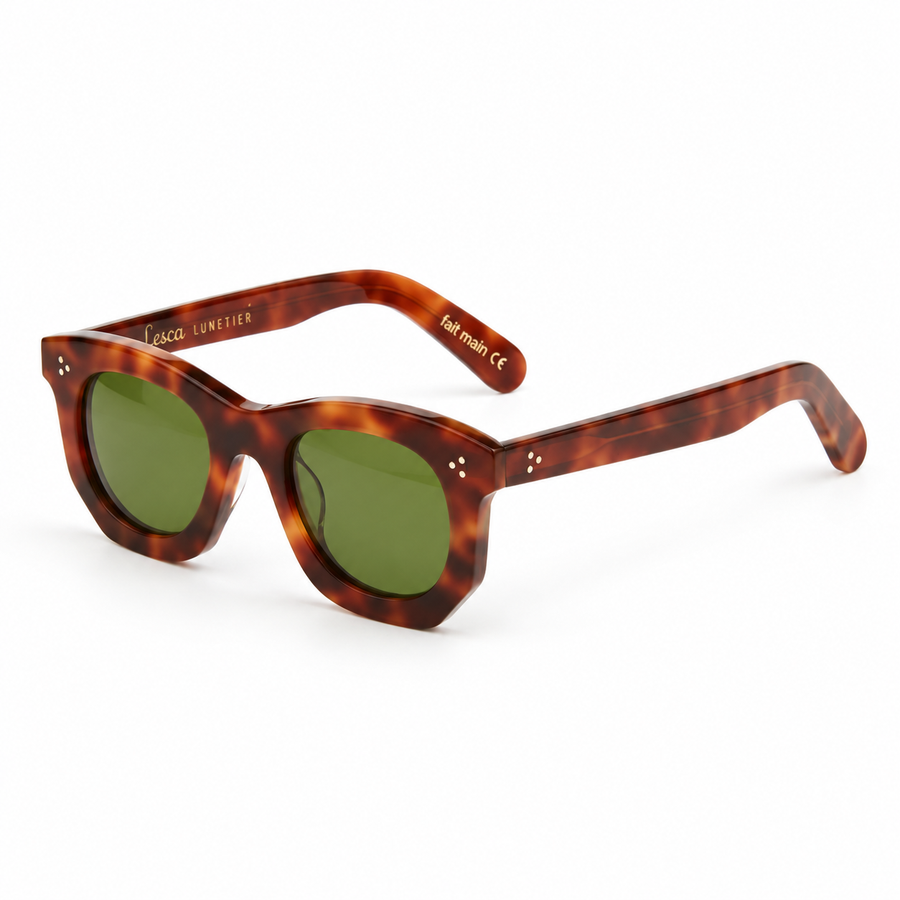

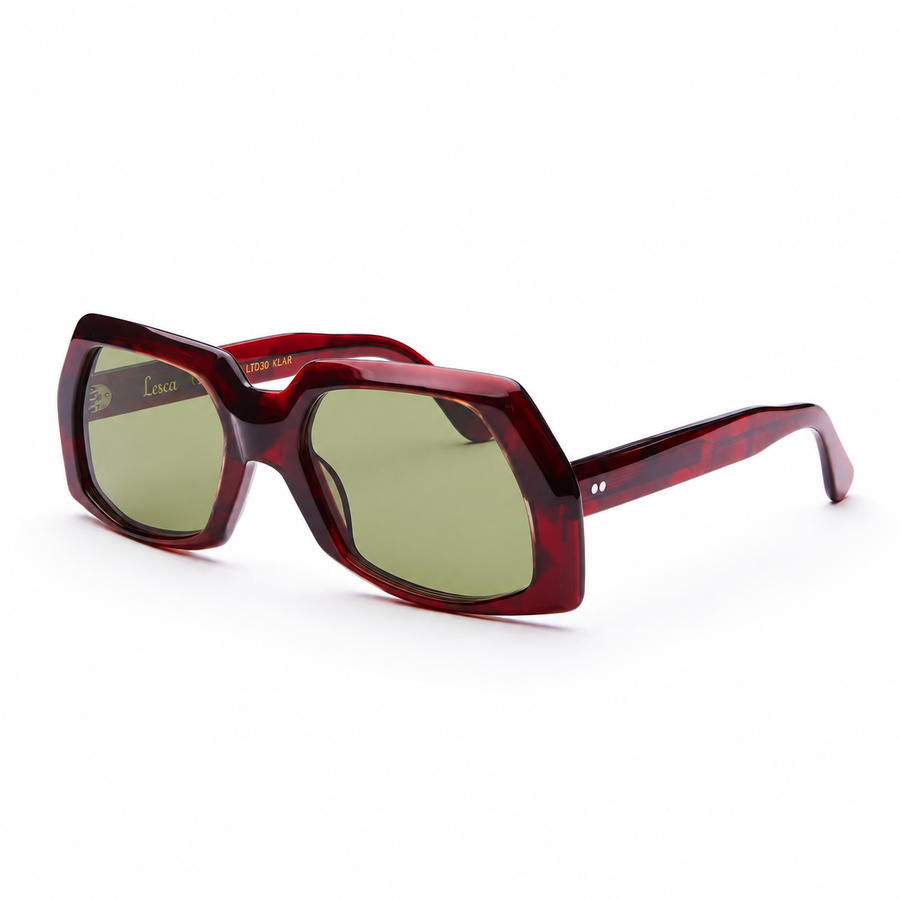


Lesca Lunetier · 1964
French elegance since 1964.
Joël Lesca founded the house in 1964; today the second generation, Mathieu and Bertrand, carries it forward with him. Acetate frames riveted and finished by hand, made in limited series in small workshops in France and Germany.



History and workshop
Since 1964 Lesca has worked with artisans across Europe, mainly in France and Germany, in small-scale workshops and factories: limited series rather than mass production. Every frame is riveted and shaped by hand to strict specifications. The reference is the 1950s and 1960s, when cellulose acetate and modern eyewear making changed French design: generous proportions, sculpted acetate, strong colours. The Upcycling line is made from the ends of acetate sheets and unused materials: Joël began reclaiming them in Brittany with a retired craftsman; today production is entrusted to a small workshop in the Jura.
Lines and models
The house's iconic range includes Pica, the crown panto with a faceted top line, Corbs, round lenses and bold proportions, Heri, Toro and Gaston. The OCCHIO! selection also has Posh, a rectangular front in Small and Medium, Ogre XL, Cuba, Club, Saga, Burt, Biggie and Phil, the Odet frames from the Upcycling line and limited editions such as Klar LTD30, Bird LTD27 and Deca. From the Journal: Lesca Pica, Posh and Corbs: the differences, Lesca Pica. The story of a crown panto and French eyewear: acetate, character and the brands to know.
A page for every model, with colours and sizes: Pica · Posh · Corbs · Ogre XL · Burt · Cuba · Heri · Toro.
How to choose
Lesca works mostly with small lens sizes and wide bridges. Pica measures 44/25, Corbs 46/27, Ogre XL 46/22; Burt (41/26) and Heri (43/24) are the most compact. Posh changes size: 47.5 in Small, 50.5 in Medium, bridge 21.5. For more surface there are Biggie and Fefe (58 mm), Tupac (56) and Lady (55), with bridges between 13.5 and 18 mm. Temples range from 145 to 155 mm.
From the Journal
-
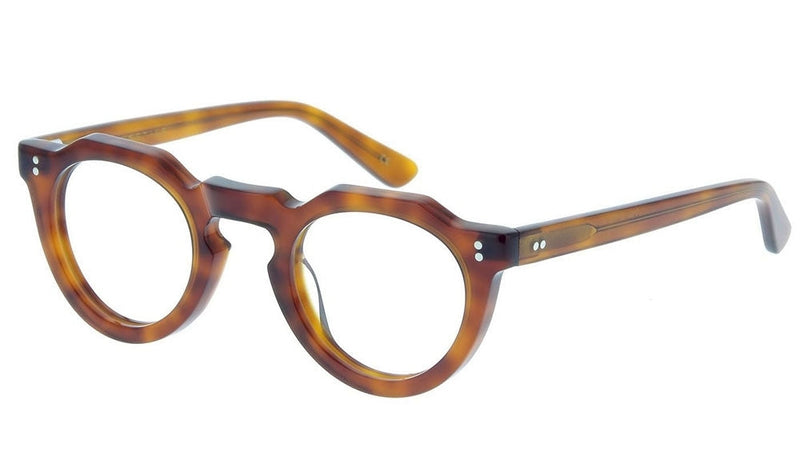 The story of a crown panto: Lesca Lunetier's PicaPicasso inspires the angles; Joël Lesca brings them to acetate. Pica’s story starts with a French shape and ends at your mirror.Read ↗
-
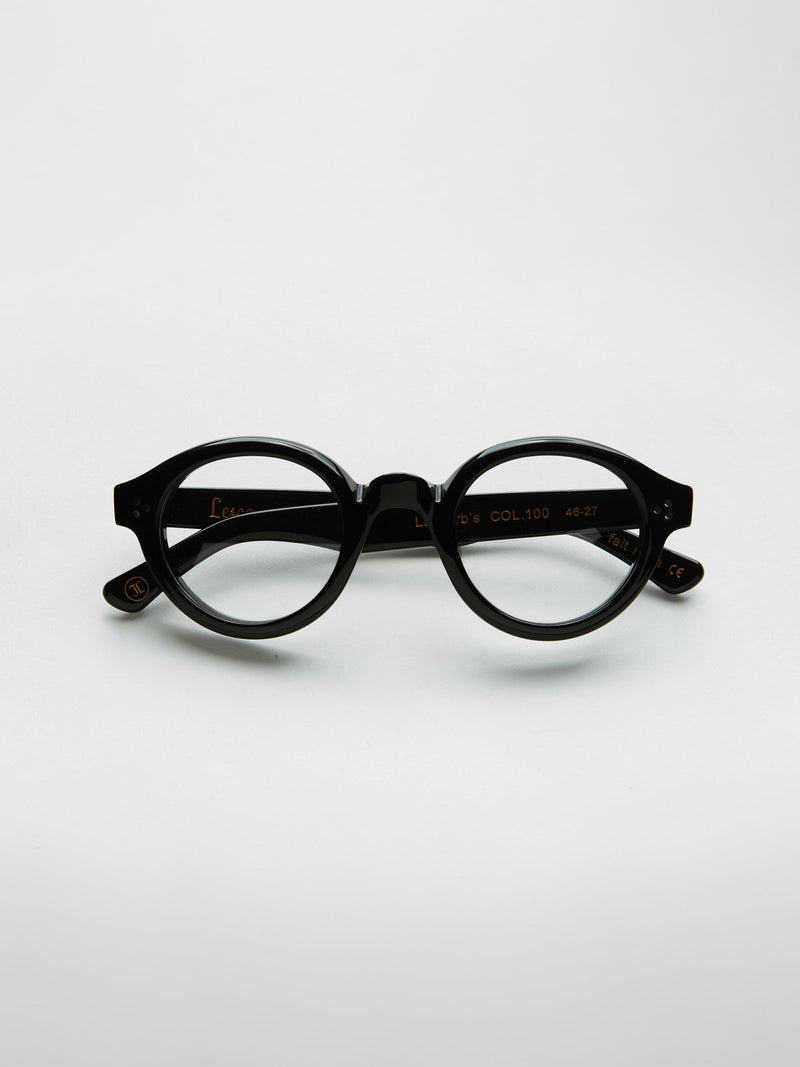 Lesca Pica, Posh and Corbs: the differencesPlace them side by side: Pica, Posh and Corbs have three distinct personalities. Picasso, a rectangle and Le Corbusier help tell them apart.Read ↗
LESCA LUNETIER in Crema, Italy
A LESCA LUNETIER makes sense on the face.
OCCHIO! is in Crema, forty minutes from Milan and Bergamo. If you are travelling, write first: the frame will be waiting.
How to choose your Lesca glasses
Pica, Posh or Corbs?
Start with the shape: Pica has a faceted upper line, Posh a rectangular front, and Corbs round lenses with bold proportions. Then compare colours within your chosen model: black, tortoiseshell and translucent acetate each give the same shape a different presence.
Optical frames or sunglasses?
Check the lens details on the individual product page. Frames supplied with demonstration lenses do not include prescription lenses. For sunglasses, also check the stated lens specifications.
How do you check the size?
Lens width, bridge width and temple length help you compare frames, but do not fully describe the fit on your nose or the overall frame width. Use our size guide and compare the measurements with a pair you wear comfortably.
Lesca Lunetier: frequently asked questions
Where are Lesca glasses made?
In Europe, mainly in France and Germany, in small workshops. The frames are riveted and shaped by hand.
Who founded Lesca Lunetier?
Joël Lesca, in Paris, in 1964. Today the brand is carried forward by Mathieu and Bertrand, the second generation.
What is the Upcycling line?
Limited-edition frames made from the ends of acetate sheets and unused materials, such as the Odet frames in our selection.
Can prescription lenses be fitted?
Yes, at the OCCHIO! boutique in Crema or by your own optician.
Where can I try Lesca glasses?
At OCCHIO!, in Crema, 40 minutes from Milan and Bergamo, and online. These are small runs with only a few pieces per model, so it is worth writing to the boutique before you come.
Do you ship Lesca to Dubai, the UAE and Israel?
Yes. Every frame ships from Crema, Italy, by tracked express courier to Dubai, Abu Dhabi and the rest of the United Arab Emirates, to Saudi Arabia, Qatar and Kuwait, and to Israel. Any import duties and local taxes are paid by the recipient on delivery.
Do you ship Lesca to the United States, the UK and the rest of Europe?
Yes. From Crema we ship by tracked express courier to the United States (free over 200 €, US duties are on us: nothing to pay on delivery), to the United Kingdom (free over 299 €, any duties paid on delivery), to Switzerland and Liechtenstein (25 €, free over 150 €, any duties paid on delivery), to every EU country (15 €, free over 150 €, no customs duties) and to Norway (15 €, free over 150 €, Norwegian VAT and any duties paid on delivery). See our pages for the US, the UK and Scandinavia.